
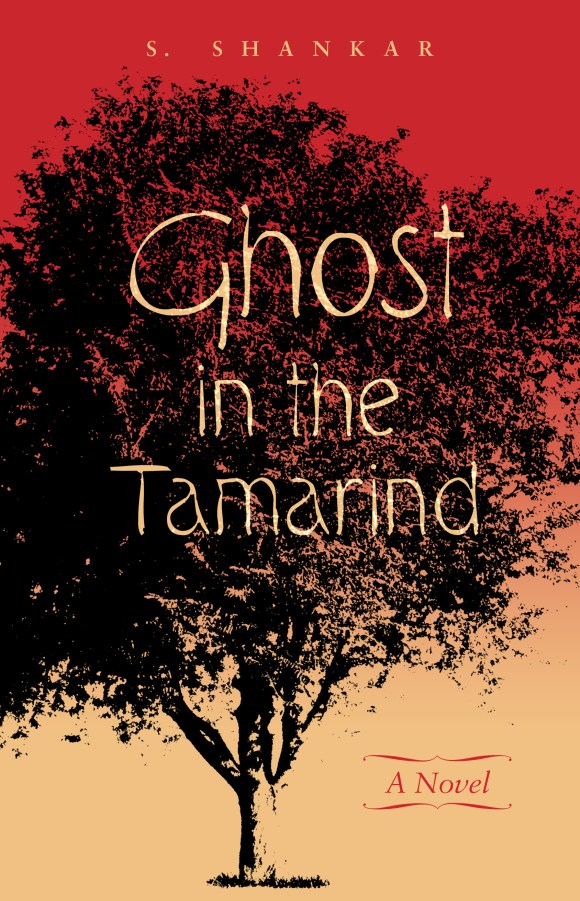
“S. Shankar captures well the rigidity of caste hierarchy in the countryside. . . . [T]his novel of forbidden love is well-crafted. It is also timeless.”
The Hindu
“[I]n its representations of cross-caste romance, its evocation of rural India from the twenties to the seventies, and its treatment of an important if lesser-known social movement, Shankar’s ambitious novel draws us into a rich and interesting world, and leads us through his characters’ intense emotional journey.”
South Asian Review
Go here for Italian translation
of
Ghost in the Tamarind
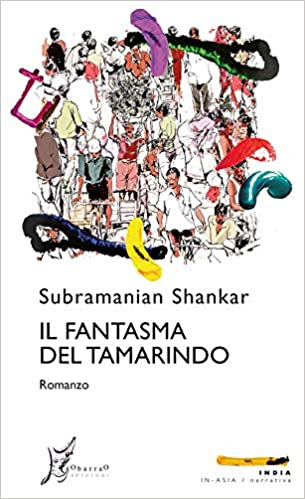
And here for
Interview
about the Italian edition
More Praise for GHOST IN THE TAMARIND
“S. Shankar’s Ghost in the Tamarind is an impressive achievement–a conscientiously woven narrative that concurrently takes into account two inviolable principles and attempts to find a balance in between: the truth as well as the invasive and often violent finitude of perspective. If the answers to history’s problems always arrive too late, a phrase I borrow from the novel, how should the history of the present be narrated in the agonizing interregnum between an unbearable present and an inconceivable salvific future? Relying on history not just as back drop but as its very backbone, Shankar’s novel creates a credible world whose realism is critically mimetic of its own conditions of possibility.” (R. Radhakrishnan, Chancellor’s Professor, University of California at Irvine)
“Ghost in the Tamarind is a novel that must be read not just for its historical
sweep but also for the power of storytelling.” (Nalini Iyer in the International Examiner)
“The narrative is rich with memorable characters and moments, along with a beautiful, sensual flow of language.” (Foreword Reviews)
“Subversions, transgressions, and transcending boundaries are at the center of Ghost in the Tamarind, and Ramu, a Brahmin with a revolutionary heart, is a fitting protagonist. One of the novel’s many pleasures is its seamless weaving of historical contexts, all the more impressive for its range, from the nineteenth century to the 1970s.” (Samrat Upadhyay)
“S. Shankar has created an ambitious and moving novel that traverses several crucial eras in India’s history. He has masterfully woven into it the lives of Ramu and Ponni, the heroic yet very human lovers who struggle against the bonds of colonialism as well as the prejudices within their own communities that threaten to destroy them.” (Chitra Divakaruni)

… also in Spanish translation (El Viaje No Ha Terminado; Belacqua 2009)
Reviews in
Rain Taxi: Review of Books 11.2 (Summer 2006): 7.
India Currents (May 16 2006): 23.
The Tampa Tribune (Florida), February 5 2006.
The Indian Express (New Delhi), December 25 2005.
Library Journal, Fall Fiction Showcase, November 15 2005.
Honolulu Weekly (Nov. 16-22 2005): p16.
Booklist, October 2005. No End to the Journey in Kirkus Reviews (Aug 15 2005)
Reviews in
World Literature Today (Winter 1998), p 209-210.
India Currents (April 1998), p 32.
MultiCultural Review (March 1998), p. 74.
ARIEL 29.1 (January 1998), p271-73.
SAMAR 8 (1997), p 60-62.
Kirkus Reviews (15 April 1997): 584-585.

