
I am a novelist, cultural critic and translator. I am Professor and former Chair of English at the University of Hawai`i at Mānoa. I am also Editor of Mānoa: A Pacific Journal of International Writing. And I am Convener of the EtCH (Essays in the Critical Humanities) Editorial Collective at np: Publications. I was a member of the Board of External Experts, Swedish Academy Committee for the Nobel Prize for Literature, 2022-2025.
I have been honored by a Fulbright-Nehru Award (2017-2018); and have been appointed the 2016 Scholar-in-Residence at the Center for Critical Race Studies at the University of Houston-Downtown and as Guest Scholar in 2017 at SOAS University (London, UK). Among other honors, I am the recipient of both the Excellence in Research Award and the Excellence in Teaching Award from the College of Languages, Literatures and Linguistics at the University of Hawai‘i.
I am the author of three novels, three volumes of criticism, and a collection of poems. Ghost in the Tamarind was published by University of Hawai’i Press in 2017. It is an inter-caste love story set against the background of anti-caste movements in India. The Hindu said of it: “S. Shankar captures well the rigidity of caste hierarchy in the countryside. . . . [T]his novel of forbidden love is well-crafted. It is also timeless.” An Italian translation is forthcoming.
A previous novel, No End to the Journey, was published by Steerforth Press in 2005. Set in a village in South India and drawing on the ancient East Indian epic the Ramayana, it tells the story of Gopalakrishnan and his difficult relationship to his son. The Indian Express noted that “it packs a punch.” A Spanish translation appeared from Belacqua (Barcelona) in 2009.
A Map of Where I Live (1997), my first novel, intertwines a story of love and political intrigue set in Madras with the memoir of an Indian historian who discovers that Lilliput (as in Jonathan Swift’s Gulliver’s Travels) really exists. Shashi Tharoor called the novel “highly original, compelling, and vivid,” and World Literature Today described it as “a minor masterpiece.”
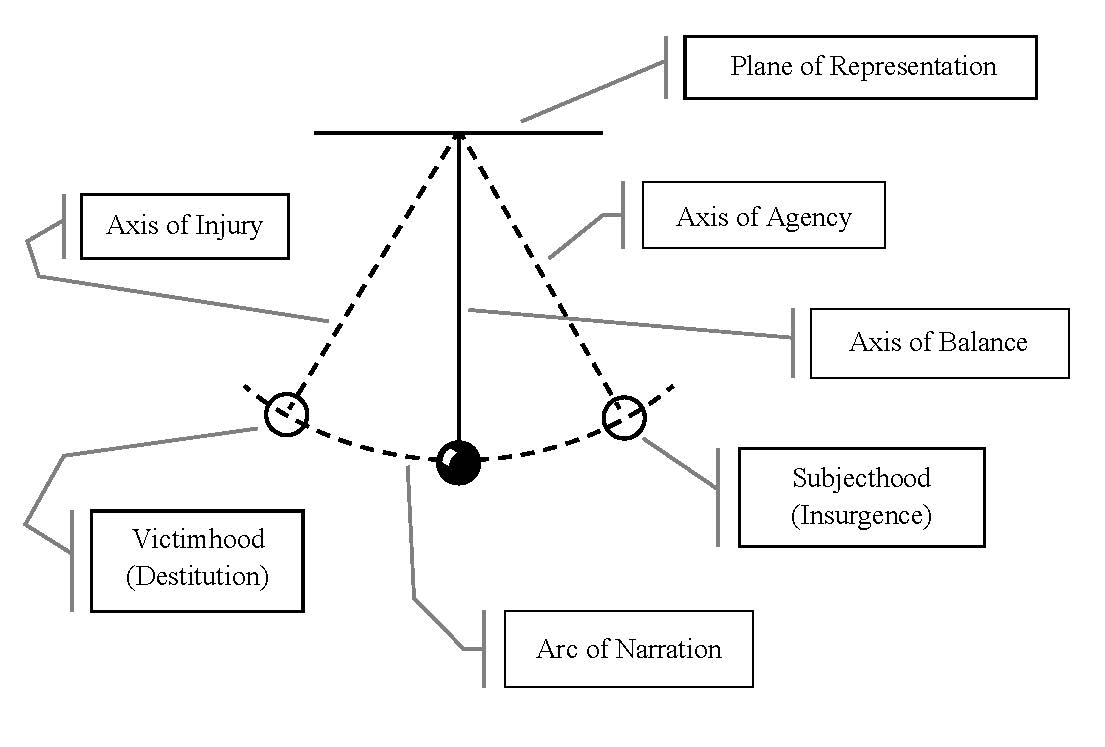
I am also the author of three volumes of criticism. The latest is The Price of Living: The Stories We Tell About the Poor, forthcoming from Duke University Press. The illustration above is from the book
The second of my volumes of criticism is the award-winning Flesh and Fish Blood: Postcolonialism, Translation, and the Vernacular (University of California Press; Orient BlackSwan India; both 2012), a scholarly study of translation and issues of caste in contemporary literature and film from India that was recognized by the American Comparative Literature Association with an Honorable Mention in 2013.
A previous volume of criticism, entitled Textual Traffic: Colonialism, Modernity, and the Economy of the Text (SUNY Press, 2001), has been positively reviewed for its explication of the relationship between colonialism and modernity and its innovations of critical methodology.
I am co-editor with Louis Mendoza of the University of Arizona of the anthology Crossing into America: The New Literature of Immigration (New Press, 2003), which brings together poems, excerpts from novels and memoirs, short stories, letters, and essays to present immigrant literature since 1965. This book, San Antonio Express News notes, is “likely the most original and best introduction to the new immigration available today.” The paperback edition of the anthology was published in 2005.
My full-length play The Library of No Books has been produced in Chennai and Bengaluru in India and is under consideration for production elsewhere.
I have published shorter pieces in a wide variety of scholarly and general interest periodicals in India and the US. My scholarly articles, poems, reviews, and literary essays have appeared in such journals as Comparative Literature, Cultural Critique, Tin House, Massachusetts Review, Outlook, The Hindu, Pioneer, Village Voice, The Nation, and PMLA. I am also the translator of the full-length Tamil play Water!, published in 2001 in India by Seagull Press and in the US by Asian Theatre Journal. This translation was performed in India in 2012 and again 2016 by the Madras Players–look under Reviews and Media Notices for relevant links.
What else might I say here about myself? I was born in India and came to the US in 1987, earning a Ph.D. in English from the University of Texas at Austin in 1993. At the University of Hawai’i at Manoa I teach contemporary literatures of the world (a term I much prefer to World Literature), translation and creative writing. I have read my fiction and lectured on literary topics widely in the US, Europe, Africa and India, including on radio. Contemporary Authors and a sourcebook entitled Asian-American Novelists have bio-critical essays on me. I was Convener of the XVI Annual Conference of the Forum on Contemporary Theory in 2013. And I co-founded the pioneering activist South Asian American periodical SAMAR (South Asian Magazine for Action and Reflection) in 1992 and was a member of its Editorial and Media Collectives for about ten years.
AWARDS AND RECOGNITIONS
Member, Board of External Experts, Swedish Academy Committee for the Nobel Prize for Literature, 2022-2025.
2025 Pushcart Prize Nomination for short story “A Servant of the Whole World,” Copper Nickel 36 (Spring 2023).
Honorable Mention for Flesh and Fish Blood, Rene Wellek Prize Committee of the American Comparative Literature Association, 2013.
Citation:
“Flesh and Fish Blood: Postcolonialism, Translation, and the Vernacular by S. Shankar is a major contribution to comparative and postcolonial studies. The book develops a strong, well substantiated argument for the value of ‘vernacular knowledges’ that have been overlooked in the current vogue for hybridity and the transnational. Taking such vernacular knowledges seriously, Shankar argues, allows us to more fully acknowledge the role of the local and the traditional in cultural self-understanding and political struggles for autonomy. Flesh and Fish Bloodoffers nuanced readings of a variety of Indian texts in Tamil, Hindi, and English, defending them against charges of provincialism or nostalgia by showing that attention to local concerns is entirely compatible with intellectual sophistication and aesthetic richness. Tamil literature, especially, emerges from this description as a major cultural site for the development of postcolonial theory and a worthy rival to the Anglophone canon. These readings are embedded in a judicious and wide-ranging discussion of such topics as nationalism, humanism, and translation, along with a powerful concluding defense of the methodology and practice of comparison. Over-all, Shankar’s book combines theoretical sophistication, deftness of interpretation and an impressive clarity and cogency of argument. It makes a compelling claim for rethinking postcolonialism within the framework of comparative vernacular literatures and makes a much needed case for a more capacious curriculum.”
Source: http://www.acla.org/wellekcitations.html
Senior Nehru-Fulbright Award, 2017-2018.
College of Languages, Linguistics and Literature Excellence in Research Senior Award, University of Hawaiʻi at Mānoa 2018.
IPPY Book of the Month Selection for Ghost in the Tamarind: A Novel. September 2017.
Visiting Scholar-in-Residence. Two-week Residency. SOAS University, London, United Kingdom. May-June 2017.
2016 Scholar-in-Residence. Center for Critical Race Studies. Week-long residency. University of Houston-Downtown. Feb. 2016.
Guest Scholar. English and Foreign Languages University (Hyderabad, India)—March 13-31 2015.
Convener, XVI Annual Conference of the Forum on Contemporary Theory (India), Theme: Translation, Comparatism and the Global South, 2012-2013. Conference held Dec. 2013.
Banff Cultural Center (Canada), Self-Directed Writing Residency Program, July 2012.
College of Languages, Linguistics and Literature Excellence in Teaching Award, University of Hawaiʻi at Mānoa 2008.
Deutsche Welle Merit Award, 1987. [For short story “Grey Cat” in an international competition.]
Vineet Gupta Award, 1987. [Led to publication of first book, volume of poetry I As Man, Calcutta Writers Workshop]
British Council Merit Award, 1986. [For short story “Madness”]
RECENT INTERVIEW
in Cerebration


